If you want waterfront proximity in West Palm Beach without giving up the charm of a historic neighborhood, El Cid deserves a close look. Buying here is not just about finding a house near the water. It is about understanding block-by-block differences, historic rules, and a market where the best opportunities can be limited. This guide will help you make sense of what matters most before you buy. Let’s dive in.
Why El Cid Stands Out
El Cid is a compact historic district in West Palm Beach, roughly bounded by Flamingo Drive, South Flagler Drive, Dyer Road, and South Dixie Highway. It sits about one mile south of downtown, with its eastern edge running along South Flagler Drive on the west shore of Lake Worth, part of the Intracoastal Waterway.
That location shapes the lifestyle. You get a residential setting with quick access to the waterfront and convenient proximity to downtown West Palm Beach. Ann Norton Sculpture Gardens is located in El Cid, the Norton Museum of Art is nearby on South Dixie Highway, and downtown events are close at hand.
For many buyers, that mix is the draw. You are not choosing between city access and neighborhood character. In El Cid, you can look for both at the same time.
El Cid’s Historic Character
El Cid is not a cookie-cutter neighborhood. The district was listed on the National Register of Historic Places in 1995, and the nomination notes 377 structures, with 281 contributing to the district’s historic character. Most residences date from 1921 to 1941.
The housing stock is primarily single-family, though the district also includes a small number of other property types such as apartment buildings, a duplex, and a motel. Nearly all homes are owner-occupied, which helps explain the neighborhood’s established feel.
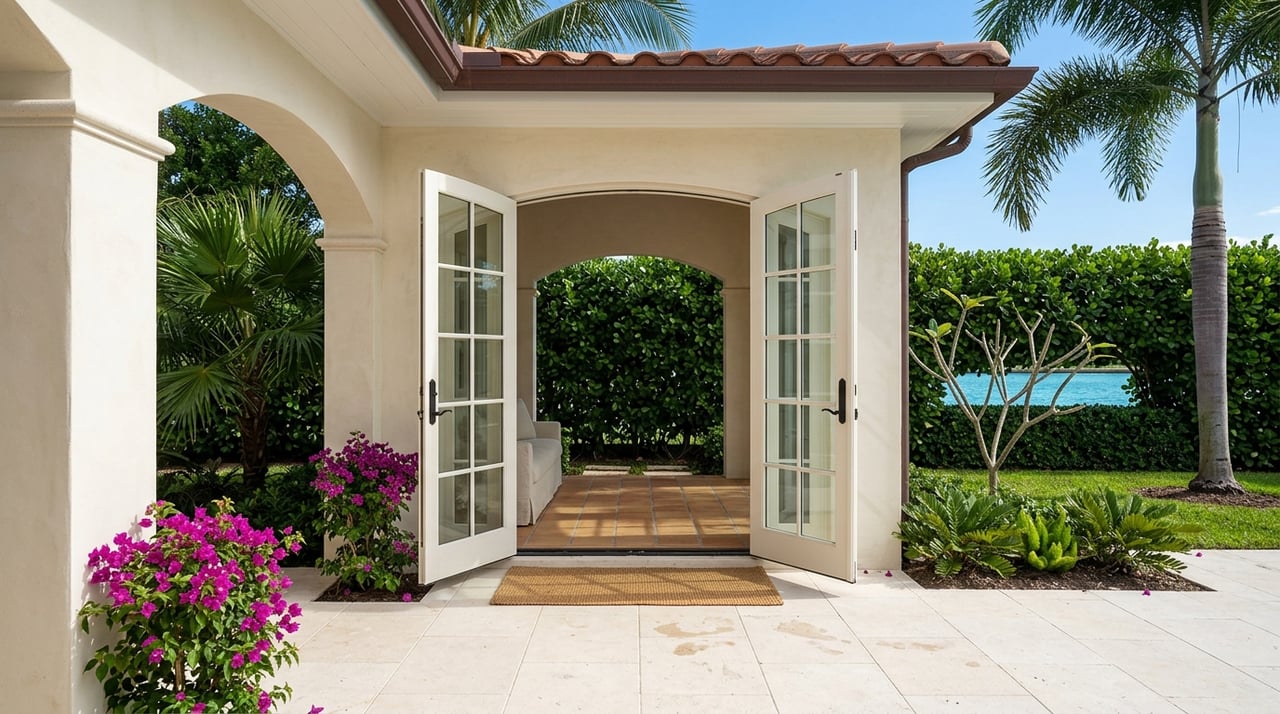
Architecturally, Mediterranean Revival is the dominant style, making up 113 of the 281 contributing structures. You will also see Mission, Monterey, Colonial Revival, and bungalow-era homes. Many residences are one or two stories, often built with wood frame or clay-tile construction and finished in stucco, with clay-tile roofs appearing often.
What Waterfront-Adjacent Really Means
When buyers hear “waterfront-adjacent,” they often picture one kind of property. In El Cid, it is more nuanced than that. Some homes sit directly along South Flagler Drive at the waterfront edge, while others are on interior streets just a short distance from the Intracoastal.
That distinction matters. A home on an interior street may still offer the feel of living near the water while delivering a different lot size, price point, or renovation profile than a property at the district’s eastern edge.
Lot size is one of the clearest examples. Recent city historic-preservation agendas show El Cid projects on sites ranging from about 0.16 acre to 0.28 acre, while county property records show examples such as 230 Avila Road on 0.14 acre, 2415 South Flagler Drive on 0.38 acre with a boat dock, and 2631 South Flagler Drive on 0.55 acre. In practical terms, interior parcels can be modest, while waterfront-edge properties can be materially larger.
What Drives Value in El Cid
In El Cid, value is driven by more than square footage alone. Frontage, lot size, architectural integrity, and exact block location all play a meaningful role in how buyers evaluate a property.
This is especially true in a neighborhood with historic homes and varied parcel sizes. Two homes with similar interior space may offer very different ownership experiences depending on whether they sit on South Flagler Drive, on a quiet interior street, or on a larger parcel with additional site features.
For buyers, this means broad averages only tell part of the story. You need to compare homes in context, not just by beds, baths, and price per square foot.
Understanding the Current Market
El Cid is a thin and selective market, and that is important to know before you start your search. Current snapshots from different housing platforms show a high-end market with limited inventory and varying pricing metrics.
For the three months ending May 2026, Redfin reported a median sale price of $2,997,992, down 13.7% year over year, with homes taking 269 days to sell and multiple offers described as rare. Realtor.com reported 8 active listings in June 2026, a median listing price of $5,447,500, and median days on market of 203, with homes selling about at asking on average. Zillow reported 7 homes for sale as of June 30, 2026 and an average home value of $3,562,096, up 14.3% over the prior year.
These figures should be treated as directional, not interchangeable, because they measure different things. Still, they point to the same general takeaway: El Cid is not a uniform, fast-moving market with one price band. It is segmented, inventory is limited, and buyers should expect a selective process.
County property records also show the range within the neighborhood. For example, 230 Avila Road sold for $2.4 million on February 25, 2026, while 319 Valencia Road sold for $3.25 million on April 16, 2025. Waterfront properties along South Flagler Drive reflect a different set of characteristics and can sit on substantially larger parcels.
How to Search Smarter in El Cid
A successful El Cid search starts with priorities. If you are drawn to waterfront-adjacent living, define what matters most early: direct water frontage, proximity to the Intracoastal, larger lot size, architectural style, renovation condition, or long-term project potential.
That matters because the neighborhood offers meaningful variation in a small footprint. One block may offer stronger water adjacency, while another may offer a more private residential feel or a different mix of lot sizes and home styles.
A focused search often works better than a wide one here. Instead of waiting for a single perfect listing to match every box, it helps to understand which variables are flexible and which are not.
Historic Rules Buyers Should Know
Because El Cid is a locally designated historic district, buyers should understand the review process before planning exterior changes. In West Palm Beach, exterior changes visible from the street require a Certificate of Appropriateness.
Interior remodeling is generally not reviewed. That can be helpful if you are planning updates inside the home while preserving the exterior character that contributes to the district.
Demolition within a historic district requires review and approval by the Historic Preservation Board. Even noncontributing properties are still reviewed when changes affect size, massing, or placement.
For buyers, the main lesson is simple. If you are considering a property because of what it could become, confirm early how historic rules may shape that vision.
A Potential Tax Benefit for Approved Work
Historic ownership may also come with a potential financial upside. The City of West Palm Beach offers an ad valorem tax exemption program that can exempt up to 100% of the assessed value of approved improvements for ten years.
There are important conditions. The work must be preapproved through a preconstruction application, completed within two years, and the exemption applies only to the value of improvements, not the assessed land value.
For the right buyer, that can be an important planning tool. It is another reason to evaluate renovation scope and approval timing before you close, not after.
Who El Cid Fits Best
El Cid tends to appeal to buyers who want historic character with immediate access to both the water and downtown West Palm Beach. If you value architecture, established streetscapes, and a neighborhood with a strong sense of place, it can be a compelling option.
It also tends to fit buyers who are comfortable with a more deliberate process. Inventory is limited, pricing is not one-size-fits-all, and preservation rules are part of ownership.
That does not make the neighborhood harder to buy into. It just means informed buyers usually have an advantage.
Buying With the Right Local Guidance
In a neighborhood like El Cid, details matter. Waterfront edge versus interior street, lot dimensions, historic status, and renovation feasibility can all affect both value and day-to-day enjoyment.
That is why local market knowledge matters so much here. You need more than a general search. You need clear insight into block-by-block differences, relevant comparables, and how a property’s historic context may shape your options after closing.
If you are considering a move in El Cid or anywhere in West Palm Beach’s historic and waterfront neighborhoods, Jefferson Kiely can help you evaluate the market with a neighborhood-first approach and hands-on guidance.
FAQs
What is El Cid in West Palm Beach?
- El Cid is a compact historic district about one mile south of downtown West Palm Beach, near the Intracoastal waterfront, with most homes dating from 1921 to 1941.
What types of homes are common in El Cid?
- El Cid is primarily a single-family neighborhood, and Mediterranean Revival is the dominant architectural style, with Mission, Monterey, Colonial Revival, and bungalow-era homes also present.
What does waterfront-adjacent mean in El Cid?
- In El Cid, waterfront-adjacent can mean anything from a home directly along South Flagler Drive to an interior-street property located close to the Intracoastal Waterway.
How much do homes in El Cid cost?
- Recent market snapshots show a wide range, including a Redfin median sale price of $2,997,992 for the three months ending May 2026 and a Realtor.com median listing price of $5,447,500 in June 2026.
Are renovations restricted in El Cid?
- Yes. Exterior changes visible from the street require a Certificate of Appropriateness, and demolition requires Historic Preservation Board review and approval.
Is there a tax benefit for restoring a historic home in El Cid?
- The City of West Palm Beach offers an ad valorem tax exemption program for approved improvements, potentially exempting up to 100% of the assessed value of those improvements for ten years if the work is preapproved and completed within two years.