Love the idea of a historic bungalow near downtown West Palm Beach but not sure how to buy with confidence in a protected district? You are not alone. These neighborhoods mix character homes, small urban lots, and special rules that shape what you can change. In this guide, you will learn how Flamingo Park and Grandview Heights work, what the homes look like, what to expect with renovations, how to read the market, and the exact steps to tour and write a strong offer. Let’s dive in.
Why these neighborhoods
Flamingo Park and Grandview Heights sit just southwest and south of downtown West Palm Beach. Both are listed on the National Register of Historic Places, with nominations describing periods of significance from the 1910s through the 1940s and detailing the dominant styles you will see on a walk. You can review the official nomination records for Flamingo Park and Grandview Heights to understand boundaries and context.
Active neighborhood associations keep a strong local identity through events and communication. You also benefit from proximity to downtown amenities. As the Grandview Heights neighborhood notes, you are close to cultural anchors and parks that many buyers value for everyday life.
Homes and styles
Flamingo Park architecture
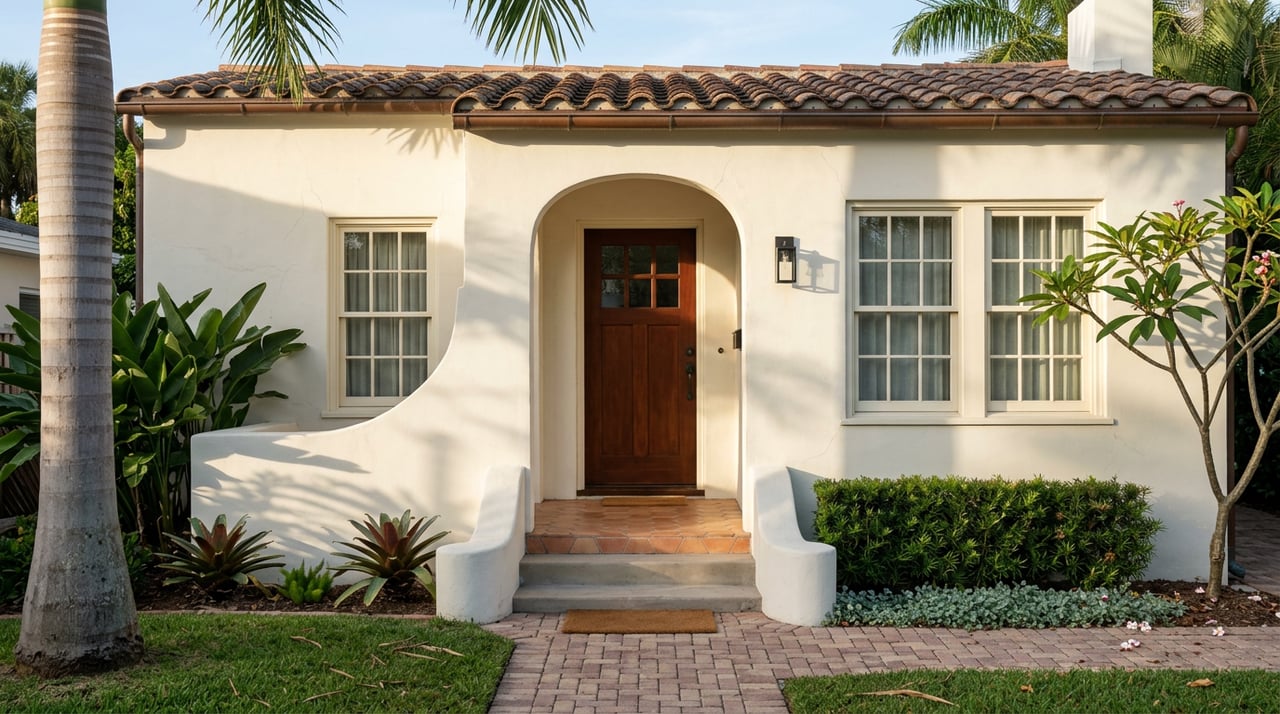
Expect many Mission and Spanish Colonial influences along with Mediterranean Revival. You will see stucco walls, red tile roofs, arches, and porches, plus a mix of 1920s to 1940s housing types. Interiors often feature original wood floors and plaster walls where preserved. Review the Flamingo Park nomination for style descriptions and examples.
Grandview Heights architecture
Grandview Heights is known for early Craftsman and Bungalow homes, along with Colonial Revival and American Foursquare forms. Spanish and Mediterranean touches appear on some houses. Many homes are one to two stories with broad porches and mature tree canopy. The Grandview Heights nomination outlines the mix and gives a helpful historic overview.
Lots, garages, and accessory spaces
Both districts follow an early 20th-century grid with sidewalks and driveways that lead to side or rear garages and, in many cases, small garage apartments. These secondary structures were common as the automobile era matured. Lots are typically small urban parcels. Many examples measure around 50 by 100 feet, or roughly 0.11 to 0.14 acre. Always verify dimensions and details on the Palm Beach County Property Appraiser parcel page for the exact address.
Renovation and approvals
When a COA is required
In the City of West Palm Beach, exterior changes to properties within local historic districts require review before you pull building permits. Smaller or rear-visible work may be approved administratively by staff. Larger or front-visible changes, including additions, often go to the Historic Preservation Board. The city’s Historic Preservation FAQs explain thresholds and the review process.
Design rules to expect
Rules favor replacement in kind for front-facing elements like windows, porches, and roof profiles. Modern visible materials, such as vinyl windows or fences, are generally not permitted. Additions should be compatible and step back from the primary facade. Landscaping is usually not regulated, but fences, site walls, and decks are reviewed. The city’s “How to Make Changes to My Property” page explains submittals, staff feedback, and how conditions carry into permits.
Timelines and sequencing
Plan for staff or board review timelines that follow monthly hearing cycles. Missing a deadline can push your project by weeks. If your plan is to modernize the front elevation or add onto the house, expect design comments and conditions, then submit final drawings and product selections that match the approval before you apply for building permits.
Codes, taxes, and flood planning
Historic tax exemption option
West Palm Beach and Palm Beach County support an ad valorem tax exemption for qualified historic rehabilitations. The exemption often applies to the increase in assessed value from approved work for a set period, typically up to ten years. You must apply before work begins and document the rehabilitation. Start with the city’s Historic Preservation information and confirm details with the City and the County Property Appraiser.
Florida Existing Building Code pathways
Florida’s Existing Building Code includes historic-building provisions that balance safety and preservation. Local officials can use these pathways to help preserve character while meeting code goals. If you are working on an older home, discuss the historic provisions early with your architect and the city. You can review the relevant code chapter online.
Flood and the 50 percent rule
If your plans trigger a “substantial improvement” threshold, often defined as work exceeding 50 percent of the structure’s value, you may need elevation or floodproofing. Historic structures have limited exceptions, but these are specific and require preserving the home’s character while adding mitigation where feasible. Start with FEMA maps and coordinate with the city’s floodplain administrator. The National Park Service offers guidance on flood adaptation for historic buildings that is useful during planning.
Insurance and inspections
Insurers for older Florida homes often ask for a 4-Point inspection that covers roof, HVAC, plumbing, and electrical. A wind-mitigation inspection can influence your premium. In South Florida, a WDO or termite inspection is also standard. Order these early in due diligence so you have time to negotiate repairs if needed. This overview of 4-Point inspections explains what carriers look for.
Market snapshot and how to read it
Neighborhood data varies by source and date, and small districts can swing with just a few sales. As an example, Zillow’s home-value index showed Flamingo Park around 1.04 million dollars through January 31, 2026, and Grandview Heights around 884 thousand dollars through December 2025. Redfin reported a Flamingo Park median sale price of about 830 thousand dollars for January 2026. These metrics use different methods. ZHVI is a smoothed valuation index, while median sale price reflects the mix of most recent closed sales. In small neighborhoods, one or two closings can shift medians a lot. Always ground decisions in the most recent comparable sales.
Buyer interest here tends to come from people who want historic character and proximity to downtown amenities. As the Grandview Heights neighborhood highlights, you have walkable access to parks and cultural spots, which helps support demand.
Historic vs newer construction
- Historic contributing homes. Pros include character, mature landscaping, close-in location, potential tax incentives, and stable neighborhood appearance due to design rules. Cons can include older systems that need replacement, design-review steps, and near-term renovation budgets if you want to preserve original fabric. See the city’s Historic Preservation FAQs for common concerns.
- Newer or infill homes. Pros include modern layouts and energy performance with fewer preservation constraints. Cons are that they may lack original character. In some cases, visible new construction still needs to meet compatibility guidelines. The Grandview Heights nomination notes areas where noncontributing parcels were redeveloped.
What to do before you tour and how to make a competitive offer
Use this checklist to move from research to a strong offer.
- Confirm historic status for the address. Check if the home is contributing or noncontributing within the district using city resources and the National Register nomination maps for Flamingo Park and Grandview Heights. Status can affect design review and incentives.
- Pull the county parcel record. Verify lot dimensions, tax history, assessed values, and permits on the Palm Beach County Property Appraiser site.
- Order inspections early. In addition to a full home inspection, schedule WDO/termite, 4-Point, and wind-mitigation inspections as needed. If plumbing age is unknown, consider a sewer scope. Insurers may require repairs before issuing coverage.
- Check flood maps and rules. If the lot sits near low ground or you plan a larger rehab, discuss the 50 percent substantial-improvement concept with the local floodplain administrator and the city’s preservation staff. The NPS flood-adaptation guidance is a helpful planning resource.
- If you plan renovations. Hire an architect and contractor who know the City’s Certificate of Appropriateness process and the Secretary of the Interior’s Standards for Rehabilitation. Ask the City for a conceptual review before final design to catch issues early. Apply for any ad valorem exemption before work starts, and budget months for approval and permitting on larger projects.
- Prepare your offer. Get a strong mortgage pre-approval or lender pre-underwriting. For cash, assemble proof of funds. In competitive moments, some buyers shorten inspection periods, include appraisal-gap language, or use escalation clauses. These tools increase acceptance odds but add risk, so align strategy with your comfort and goals.
- Ask for records. Request the seller’s COA and permit history, plus documentation of roof, electrical, plumbing, and HVAC upgrades. Verify any unpermitted work with municipal records to avoid surprises.
Work with a hyperlocal advisor
Buying in a historic district rewards careful planning and neighborhood insight. You want a broker who knows the local review boards, the difference between contributing and noncontributing homes, and the market nuance street by street. With more than 500 closed transactions and a hands-on, marketing-first approach, Jefferson Kiely offers buyer representation, market analysis, renovation and new-construction advisory, investor guidance, and concierge transaction management tailored to West Palm Beach’s historic neighborhoods. Ready to tour or want a private consult on a property you have your eye on? Reach out to Jefferson Kiely. Let’s Connect.
FAQs
What is the main difference between Flamingo Park and Grandview Heights?
- Both are close-in historic districts, but Flamingo Park leans Mediterranean and Spanish Revival, while Grandview Heights features more Craftsman and Bungalow forms per their National Register nominations.
Do you need approval to replace windows on a historic home in these districts?
- Yes, exterior changes in local historic districts usually require a Certificate of Appropriateness, and front-facing windows often must match original profiles and materials under city guidance.
How big are typical lots in Flamingo Park and Grandview Heights?
- Many parcels are small urban lots around 50 by 100 feet, roughly 0.11 to 0.14 acre, but you should verify each address on the county parcel record.
What inspections do insurers want for older Florida homes?
- Expect a 4-Point inspection for roof, HVAC, plumbing, and electrical, plus a wind-mitigation inspection; WDO or termite inspections are also common in South Florida.
Are there tax incentives for renovating a historic home in West Palm Beach?
- The city and county offer an ad valorem exemption for qualified historic rehabilitation, typically applied to the increase in assessed value for a set term if you apply before work begins.
How should you read Zillow and median sale price data here?
- ZHVI is a smoothed index that reduces monthly swings, while median sale price reflects the most recent closed deals and can jump with just a few sales in small districts.
What should you do before making an offer on a historic home?
- Confirm historic status, pull the parcel record, check flood risk, schedule key inspections, review permits and COAs, line up financing or funds, and tailor offer terms to conditions.
Flamingo Park nomination (NPS)
Grandview Heights nomination (NPS)
Grandview Heights neighborhood overview
City Historic Preservation FAQs
How to Make Changes to My Property
City Historic Preservation program and tax info