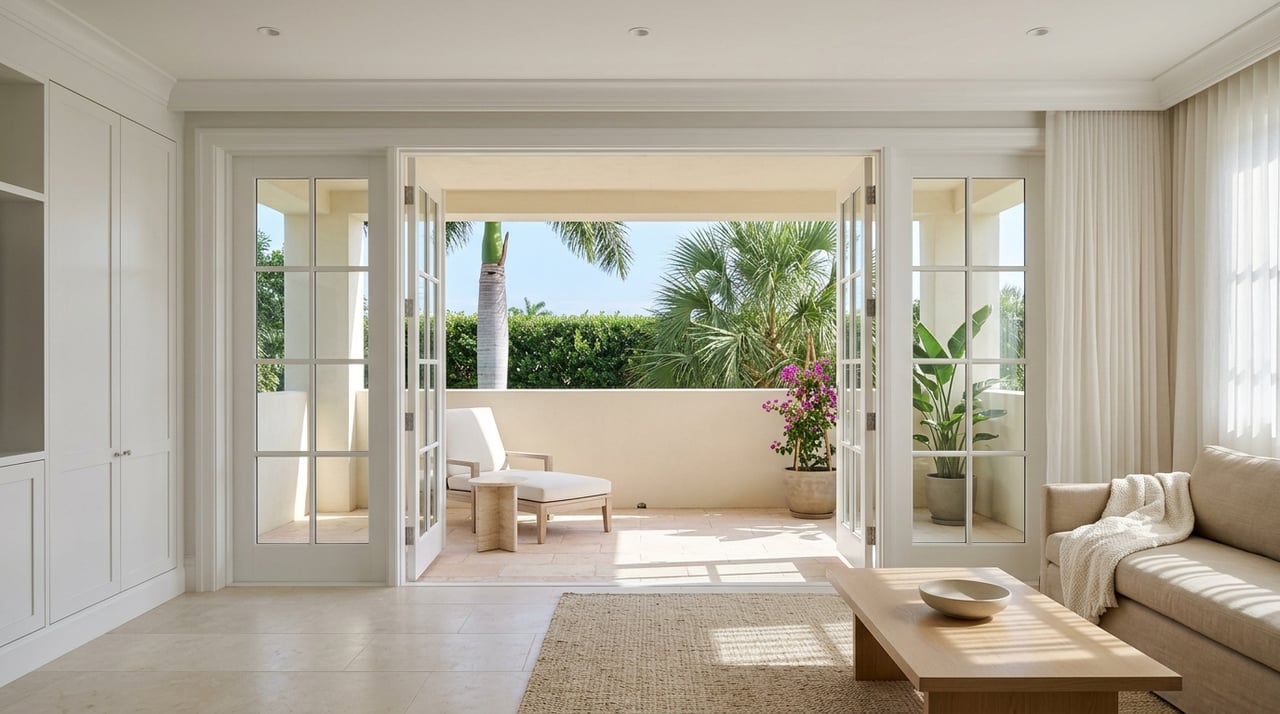
Trying to choose between a Palm Beach condo and a single-family home? On this island, the decision is about far more than square footage alone. You are weighing privacy, upkeep, approvals, pricing, and how you want to live day to day in one of South Florida’s most distinctive luxury markets. This guide will help you compare both options clearly so you can move forward with more confidence. Let’s dive in.
Palm Beach Market Context
Palm Beach sits in a very different price bracket than the rest of the county. Realtor.com places the town’s median listing price at about $3.0 million, while Palm Beach County overall is around $507,000. That gap matters because countywide numbers can create the wrong expectations if you are shopping on the island.
Townwide pricing also remains elevated. In Q1 2026, Palm Beach’s combined median sales price across homes and condos was $2.51 million, with 128 closed sales and 422 homes in inventory. Nearly 29.7% of closed sales were above $5 million, which shows just how luxury-focused this market remains.
Condo vs Single-Family Basics
At a high level, condos and single-family homes offer two different ownership experiences. A condo often gives you a more managed, service-oriented setup, while a single-family home usually gives you more direct control over the property. In Palm Beach, that tradeoff becomes especially important because both property types come with their own rules and review processes.
Your best fit depends on how you value convenience, privacy, outdoor space, and flexibility. Some buyers want a lock-and-leave residence with less exterior responsibility. Others want a detached home where they can shape the property more directly, even if that means more oversight and maintenance.
How Condo Ownership Works
Under Florida law, a condominium is operated by its association. The association’s powers include maintenance, management, and operation of the property, and it must keep official records such as current rules, bylaws, accounting records, structural integrity reserve studies, and inspection reports.
That structure affects your day-to-day ownership. Common elements are generally maintained by the association, though some limited common-element responsibilities can be assigned to the unit owner through the condo documents. In practical terms, you should expect monthly dues, board rules, and building-level decisions to play a major role in your ownership experience.
Why Condos Appeal to Many Buyers
For many buyers, condos are the easier lock-and-leave option. Because the association handles common elements and much of the building-level administration, you may have less exterior upkeep to manage yourself. That can be especially appealing if you split time between Palm Beach and another home or if you simply want a more streamlined ownership model.
Condos can also offer an easier entry point into the Palm Beach market. In Q2 2025, Palm Beach condos posted a median sales price of $1.85 million, compared with $12.925 million for single-family homes. That is still a luxury price point, but it illustrates the wide pricing gap between the two categories.
What to Review Before You Buy a Condo
In Palm Beach, condo due diligence should go well beyond the unit itself. Since Florida law requires associations to maintain rules, bylaws, audits, accounting records, structural reserve studies, and inspection reports, you will want to review those materials closely. They can reveal how the building is managed and whether major capital projects may be approaching.
Florida’s condo safety rules are also especially relevant for older coastal buildings. Buildings that are three stories or more must have milestone inspections at 30 years and every 10 years after that, and local enforcement agencies may require the first inspection at 25 years in salt-water proximity. Residential condominium associations for qualifying buildings three habitable stories or higher must also complete a structural integrity reserve study at least every 10 years.
How Single-Family Ownership Works
A single-family home gives you more direct ownership control, but that does not mean fewer rules in Palm Beach. The Town regulates setbacks, height, lot coverage, building volume and mass, and landscape open space. If you are considering renovations, additions, or exterior changes, those standards can shape what is feasible.
Palm Beach also has an active design review and historic-preservation framework. For non-landmarked or historically significant buildings, the Architectural Commission reviews design compliance. If a property is landmarked, changes go through the Landmarks Preservation Commission instead.
Why Single-Family Homes Appeal to Many Buyers
Single-family homes usually offer more privacy and more room to shape your environment. Palm Beach market data from Q2 2025 show average living area of about 4,263 square feet for single-family homes versus 1,649 square feet for condos. That is a useful indicator of the difference in scale many buyers feel when touring both options.
With a detached home, you often gain more private outdoor living space and more control over landscaping and entertaining areas. For buyers who value quiet separation, larger interiors, or a more independent ownership experience, that can be a major advantage.
What to Review Before You Buy a Single-Family Home
If you are buying a single-family property in Palm Beach, it is smart to think ahead about your plans for the home. If you want to renovate, expand, or alter visible exterior elements, you may need town review and permitting. That is particularly important in a market where neighborhood character and architectural consistency carry real weight.
Historic status matters too. The Town notes that more than 328 landmark properties, sites, and vistas are protected. If a home is landmarked, review standards may be more specific, so understanding that early can help you match the property to your goals.
Lifestyle Differences That Matter
For many buyers, this choice comes down to how you want your life to feel in Palm Beach. A condo often fits best if you want convenience, less exterior maintenance, and building-level management. A single-family home often fits best if you prioritize privacy, outdoor space, and more control over the property’s appearance and use.
Neither option is automatically better. The better choice is the one that aligns with your routine, your tolerance for upkeep, and how hands-on you want to be after closing.
If You Value Convenience
A condo may be the better fit if you want a residence that is easier to leave and return to. The association-led structure means many shared maintenance and administrative tasks happen at the building level. That can simplify ownership if you are relocating, buying a second home, or prefer a more managed experience.
If You Value Privacy and Space
A single-family home may make more sense if you want separation from neighbors, larger interior footprints, and more private exterior areas. In Palm Beach, detached homes typically provide a very different sense of scale. If your ideal property includes substantial outdoor living or more design freedom, this category may suit you better.
Palm Beach Pricing Differences
The pricing spread between condos and single-family homes on the island is significant. In Q2 2025, condos had a median sales price of $1.85 million and an average sales price of $2.68 million. Single-family homes posted a median sales price of $12.925 million and an average sales price of $15.91 million.
Supply was fairly similar in pace, though still distinct by property type. Condos had 202 active listings and 6.6 months of supply, while single-family homes had 73 active listings and 5.8 months of supply. Those figures help show that both segments are active, but they operate on different pricing and inventory scales.
Recent activity also shows continuing condo demand. In Q1 2026, Palm Beach condo and co-op sales reached a five-year first-quarter high of 99 sales, up 43% year over year, while condo and co-op inventory fell 19% year over year. During the same period, single-family active listings in the Town of Palm Beach rose to 111, up 6% year over year.
Approval and Permitting Differences
Approvals matter in both categories, but they work differently. In a condo, exterior work adds another layer because the Town’s construction permit checklist requires a condo approval letter for all exterior work in any condo unit or building. That means your building’s process can directly affect timing and scope.
For single-family homes, town design review is the key factor. Depending on the property and the work planned, ARCOM or the Landmarks Preservation Commission may review modifications. If you are comparing two homes and one offers more flexibility for future updates, that can become an important decision point.
Which Option May Suit You Best
A Palm Beach condo may suit you if you want lower day-to-day exterior responsibility, a more managed ownership structure, and a lower price entry than many detached homes on the island. It can be a strong fit for second-home buyers, relocation buyers, or anyone who values simplicity and building-level administration.
A Palm Beach single-family home may suit you if you want privacy, larger living areas, more outdoor control, and a more independent ownership experience. It can be a strong fit for buyers who care deeply about space, landscape, entertaining, or shaping the look and feel of the property over time.
The right choice often becomes clearer when you compare not just listings, but also your lifestyle goals. In Palm Beach, that kind of clarity matters because the market is high-value, highly nuanced, and shaped by ownership structures that can feel very different in practice.
If you are weighing condos against single-family homes on Palm Beach island, working with a local broker who understands the nuances can save time and help you focus on the right opportunities. For tailored guidance on Palm Beach buying decisions, connect with Jefferson Kiely.
FAQs
What is the main difference between a Palm Beach condo and a single-family home?
- A Palm Beach condo is generally association-led, with shared maintenance and building-level rules, while a single-family home gives you more direct control over the property but still requires compliance with town zoning, design review, and permitting rules.
Are Palm Beach condos usually less expensive than single-family homes?
- Yes. In Q2 2025, Palm Beach condos had a median sales price of $1.85 million, while single-family homes had a median sales price of $12.925 million.
What documents should you review when buying a Palm Beach condo?
- You should review association rules, bylaws, accounting records, audits, structural integrity reserve studies, and inspection reports because Florida law requires the association to maintain those records.
Do Palm Beach single-family homes have renovation rules?
- Yes. The Town of Palm Beach regulates setbacks, height, lot coverage, building volume and mass, landscape open space, and exterior design review, and landmarked properties may face additional review.
Are older Palm Beach condo buildings subject to inspections?
- Yes. Under Florida law, qualifying buildings that are three stories or more must meet milestone inspection and structural reserve study requirements on a set schedule.
Is a Palm Beach condo better for a second home?
- It often can be, because the association handles common elements and much of the building-level administration, which may make ownership easier for buyers who want a lock-and-leave setup.